Filter Press Machine About
Filter Press Machine Description
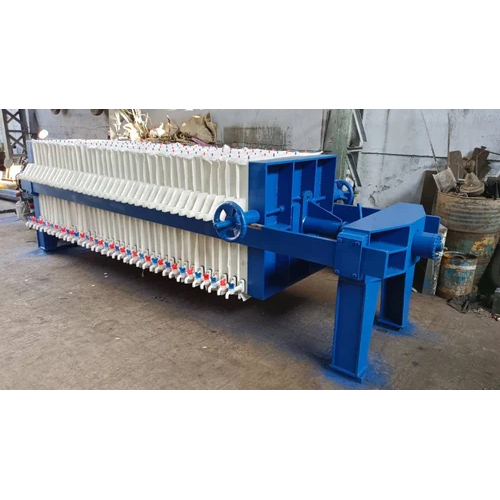
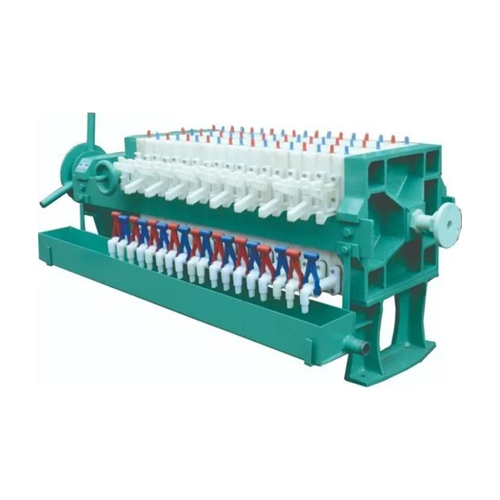
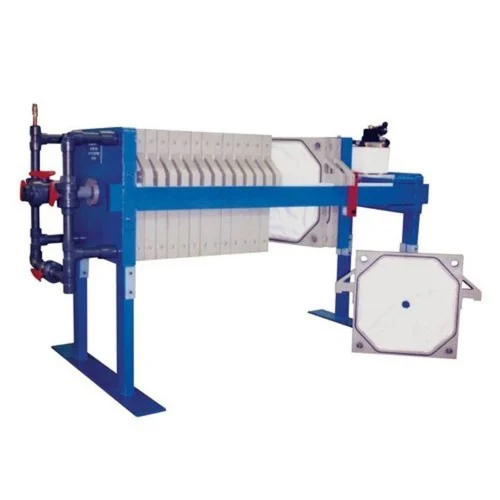
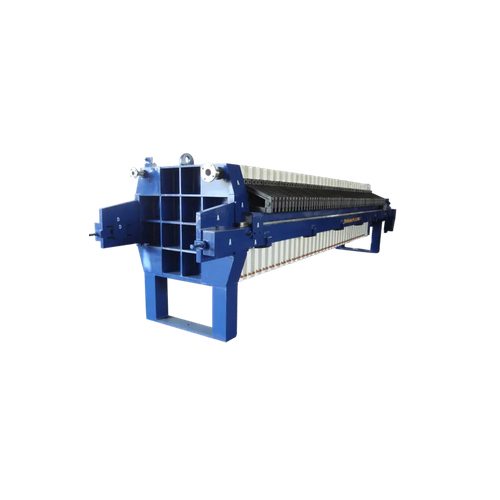
A filter press machine is equipment used for separating solids from liquids through filtration under pressure. It consists of plates and frames with filter cloths. The machine is used in various industries for dewatering sludge or separating solids.
Key Features and Benefits
Effective separation: Separates solids from liquids efficiently.
Used in industries: Common in wastewater treatment, mining, etc.
Filter press machines are utilized for solid-liquid separation in India.
High-Durability Design for Demanding ApplicationsBuilt with a heavy-duty welded steel frame and reinforced polypropylene or cast iron plates, this filter press machine offers exceptional resistance to corrosion and mechanical stress. Its sturdy construction and advanced sealing options ensure reliable, leak-proof filtration in harsh industrial settings including ETPs, chemical plants, and mining operations.
Flexible Operation and Customizable FeaturesChoose from a range of plate sizes (470 mm x 470 mm to 1000 mm x 1000 mm), discharge types, and hydraulic closing devices-either manual or automatic-for optimal workflow integration. Optional accessories like drip trays, side protections, and automated plate shifters increase productivity and safety. Operating temperatures up to 80C and low-noise motors further enhance user experience.
Efficient Solid-Liquid Separation Across IndustriesDesigned for solid-liquid separation processes, the filter press is versatile across many sectors such as food processing, pharmaceuticals, dyes, and metallurgy. With a filter area up to 60 m2 and flow rates up to 3000 LPH, it efficiently manages different filtration volumes, supporting continuous operation and high throughput in demanding industrial environments.
FAQ's of Filter Press Machine:
Q: How does the filter press machine achieve solid-liquid separation?
A: The filter press machine processes slurry by feeding it under pressure through a series of filter plates made of reinforced polypropylene or cast iron. Solids are trapped on the filter cloths, forming a cake, while liquids pass through and are collected separately. The precise hydraulic or manual closing device ensures uniform pressure distribution, enhancing filtration efficiency.
Q: What industries can benefit from using this filter press machine?
A: This filter press is ideal for effluent treatment plants (ETP), chemical manufacturing, dye production, food processing, pharmaceutical industries, mining, and metallurgy. Its design supports various capacities and configurations, making it adaptable for applications requiring reliable solid-liquid separation.
Q: When should you opt for automatic versus manual hydraulic closing devices?
A: Automatic hydraulic closing devices are recommended for operations requiring frequent filter press cycles, larger capacities, or reduced manual intervention. Manual hydraulic closing is suitable for smaller-scale processes or where budget constraints exist. Selection depends on operational demands and workflow preferences.
Q: Where should the filter press machine be installed for optimal performance?
A: Install the filter press on a flat, stable surface near the source of slurry and convenient discharge points. Ensure adequate space for plate extension, cake discharge, and easy maintenance. Locations should allow for proper electrical connections and safety clearances, especially in industrial plants or process halls.
Q: What is the typical process for operating the filter press machine?
A: The process begins by loading the slurry into the filter press using a centrifugal or screw feed pump. Once the filter plates are closed (manually or automatically), pressure is applied, causing the liquid to pass through the filter cloths, leaving the solids as a cake. After filtration, the plates are separated, and the cake is discharged, while the machine is prepared for the next cycle.
Q: Is the filter press suitable for high-temperature applications?
A: Yes, the machine is designed to operate at temperatures of up to 80C, making it suitable for various industrial processes that involve elevated temperatures. The use of premium materials such as reinforced polypropylene, cast iron, and stainless steel enhances its performance and longevity under thermal stress.
Q: What are the primary benefits of using this filter press machine?
A: Users benefit from high durability, corrosion resistance, easy plate shifting, low noise levels (below 75 dB), and flexible control options. The modular design accommodates a wide range of capacities, ensuring efficient solid-liquid separation and minimal maintenance, contributing to lower operational costs and improved productivity.

 Send Inquiry




 Send Inquiry


 Send Inquiry


