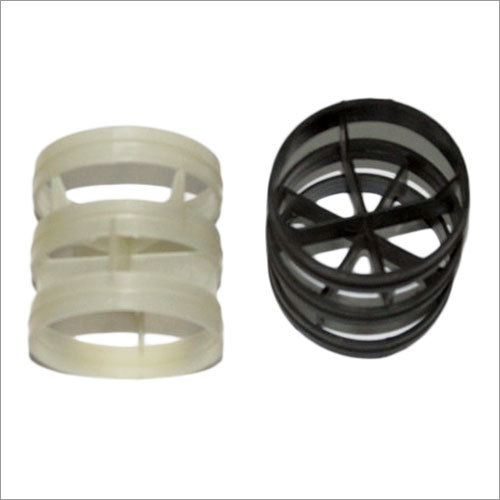
Plastic Pall Rings About
Neeravi Aqua and Fire Solutions are reckoned as one of the reputed manufacturers and suppliers of Plastic Pall Ring The offered ring is manufactured under the observation of our skilled professionals using topnotch quality plastic with the aid of advanced techniques This ring is extensively used in the separation of ethylbenzene and methylbenzene Apart from this the provided Plastic Pall Ring can be purchased from us at economical prices
Features
Easy to fit
Sturdy design
Fine finish
Highly durable
Superior Material VersatilityPlastic Pall Rings are engineered from various plastics, including PP, PE, PVC, and PVDF, allowing users to select the best fit based on chemical resistance, temperature requirements, and process compatibility. Their durable design and customized sizing options make them suitable for diverse industrial settings.
Efficient Mass Transfer and Packing FactorsThe rings deliver an exceptionally high packing factor of up to 95 m/m and a void space of 90%. This design ensures efficient gas-liquid contact, optimizes pressure drop, and minimizes channeling within mass transfer equipment, crucial for chemical processing and water treatment applications.
Broad Industrial ApplicationPlastic Pall Rings serve multiple rolesincluding catalyst support, scrubbing, absorption, and strippingmaking them indispensable in industries such as chemical production and water treatment. Their ease of installation as random packing further enhances operational efficiency and cost-effectiveness.
FAQs of Plastic Pall Rings:
Q: How are Plastic Pall Rings installed in industrial equipment?
A: Plastic Pall Rings are typically installed as random packing in towers or reactors. The rings are poured or loaded into the vessel to create an evenly distributed bed, facilitating efficient gas-liquid contact and mass transfer.
Q: What are the main applications of Plastic Pall Rings?
A: These rings are commonly used in packed bed reactors, absorption columns, stripping, scrubbing, distillation units, water treatment facilities, and in processes requiring efficient gas-liquid separation and mass transfer.
Q: When should I choose PP, PE, PVC, or PVDF material for Pall Rings?
A: Material selection depends on process conditions. Use polypropylene (PP) for general chemical resistance and up to 120C. Polyethylene (PE) is suitable for lower temperatures. PVC offers good chemical resistance, and PVDF is ideal for highly corrosive environments or higher temperatures.
Q: Where are Plastic Pall Rings most beneficial?
A: They are particularly beneficial in environments demanding corrosion resistance, such as chemical manufacturing, water treatment, and industrial gas scrubbing processes, thanks to their resilience and adaptability.
Q: What are the benefits of using Plastic Pall Rings over traditional packing media?
A: Plastic Pall Rings offer higher void space and packing factor, improved resistance to fouling and chemical corrosion, lighter weight for easier handling, and flexibility for various process conditions and sizes.
Q: How does the wall structure and perforation enhance performance?
A: The perforated wall and support ribs increase surface area while maintaining 90% void space, maximizing flow distribution, minimizing pressure drop, and enhancing mass transfer efficiency in packed columns.

 Send Inquiry


 Send Inquiry


 Send Inquiry


